
{'We only have the sea to live on' - Senegal's fishermen blame gas plant for dwindling fish harvests
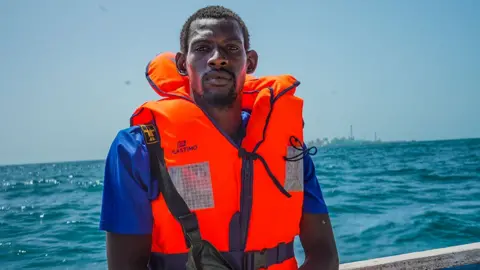
Each morning, a local fisherman, who fishes in the northern coastal city of St. Louis, goes fishing with a mix of emotions: hope and frustration.
He wishes he will get a better catch than the previous day, yet he is disheartened by the thought that whatever he finds might not cover expenses.
"In the past, we fished to make a living, but now we just fish to get by," states the 25-year-old.
Like him, numerous artisanal, local fishers in Saint-Louis - an important fishing center - are facing hard times.
The primary culprit: LNG platform
Multiple fishermen and people linked to the fishing industry all point to one issue - a LNG facility that is located on the sea boundary between Senegal and Mauritania, just offshore of the city.
The multi-billion dollar gas development is expected to produce roughly 2.3 million tonnes of LNG per year for more than two decades.
However, residents of the city say this brings restrictions on fishing which ninety percent of the city's population of more than a quarter million rely on for their income.
Limited access and economic impact
After motoring 10km offshore, fishermen approach the giant gas facility but cannot get any closer due to a 500-meter restricted area which limits fishing activities.
"The authorities prohibit us to fish in the restricted zone of the platform, under penalty of confiscation or even damage of our nets if we access it," says one fisherman.
Fishermen say the platform is built around a underwater reef teeming with marine life – the restrictions mean their harvests decline and they barely earn a living.
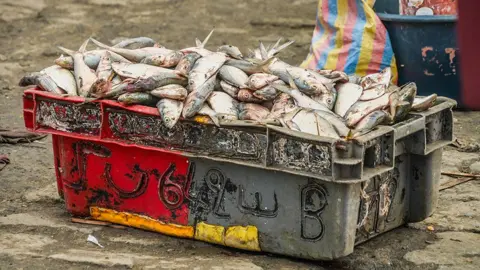
"There's great frustration," admits one fisherman. "Sometimes we remain until 4pm twiddling our thumbs, without fish."
Economic impact on local residents
Processing is typically predominantly done by female workers. But with the reduction in the fish population in the area, numerous women are becoming unemployed.
One local woman, who processes fish in the open air, says many workers who once worked with her at a processing facility are now without work.
"Seafood is now very costly, shipping expenses are high. Nowadays, we make barely enough to pay bills," says the mother of 10.
Fishermen say they previously earned between $400-600 from a day's fishing, but nowadays, they barely make $90.
Decreasing income are forcing numerous fishers, to consider abandoning their traditional occupation.
"We are forced to persist with our fishing work, because we have no other choice," he says. "However when a employment chance arises, we will take it immediately."
Alternative livelihoods and unfulfilled commitments
Others have left behind fishing for alternative opportunities, including seeking work abroad.
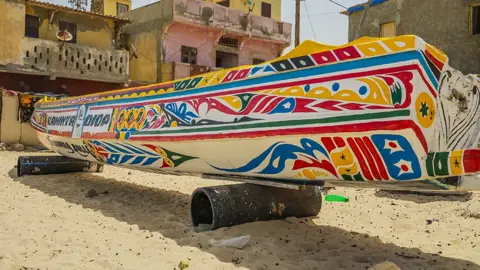
One of those who stopped fishing is middle-aged Saer Diop. For several years, the long-time fisherman has also been working as a woodworker - making, fixing and painting canoes.
"Currently, I make more money with carpentry than with catching fish," he admits.
Although he acknowledges the work as a carpenter is not regular, he believes traditional fishing has become "extremely challenging" because of the LNG facility.
Members of a local association supporting artisanal fishermen in the city say the company has failed to deliver its promise to build alternative fishing areas where they could improve their harvest.
"During initial discussions in 2019, they told people: 'We're going to build you eight artificial reefs' to at least replace our traditional fishing grounds," says a fishermen's representative.
Yet, he says that six years on "nothing has been done."
Safety issues and ongoing disputes
The operators says between 2021 and 2023, feasibility studies and additional analysis revealed that only a couple of multiple locations were "considered suitable for a reef of substantial size."
Fishermen say the company intends to construct the artificial reef just four kilometers from the coastline, calling the location as unsuitable to support marine life.
Recently, there was a gas leak described as "minor leakage" in one of the wells.
An environmental activist, a Dakar-based ocean campaigner with a conservation group, says such incidents could have "significant impact" on the marine ecosystem.
"The company has not revealed the true quantity of the gas leak," states the activist.
He explains research shows that such a gas leak had the potential to destroy ocean life, coral areas, algae and resources that allow fish to feed.
Uncertain future for fishing communities
Representatives of the small-scale fishers in the city say the assurance of financial benefits through the project comes at a great cost.
They argue it deprives them of unrestricted entry to their much-cherished sea, leaving them with an unpredictable situation.
Additionally, they blame the government of supporting the operators to their detriment.
"We only have the ocean to survive from," says one fisherman.
As the situation continues, local residents in Saint-Louis confront an increasingly difficult balance between economic development and centuries-old fishing practices.

